Sustainability

Environmental Sustainability

Reducing the Environmental Impact of Artificial Turf

TenCate is committed to improving the future of synthetic turf through innovation, responsible manufacturing, and lifecycle planning. Every stage of the turf lifecycle is continuously evaluated to reduce environmental impact, improve resource efficiency, and create long-term value for sports facilities, athletes, communities, and the environment. From design and production to recycling and reuse, TenCate is helping shape the future of artificial turf systems that are built to last, reduce waste, and support efficient, long-lasting sports infrastructure.

TenCate ESG Report

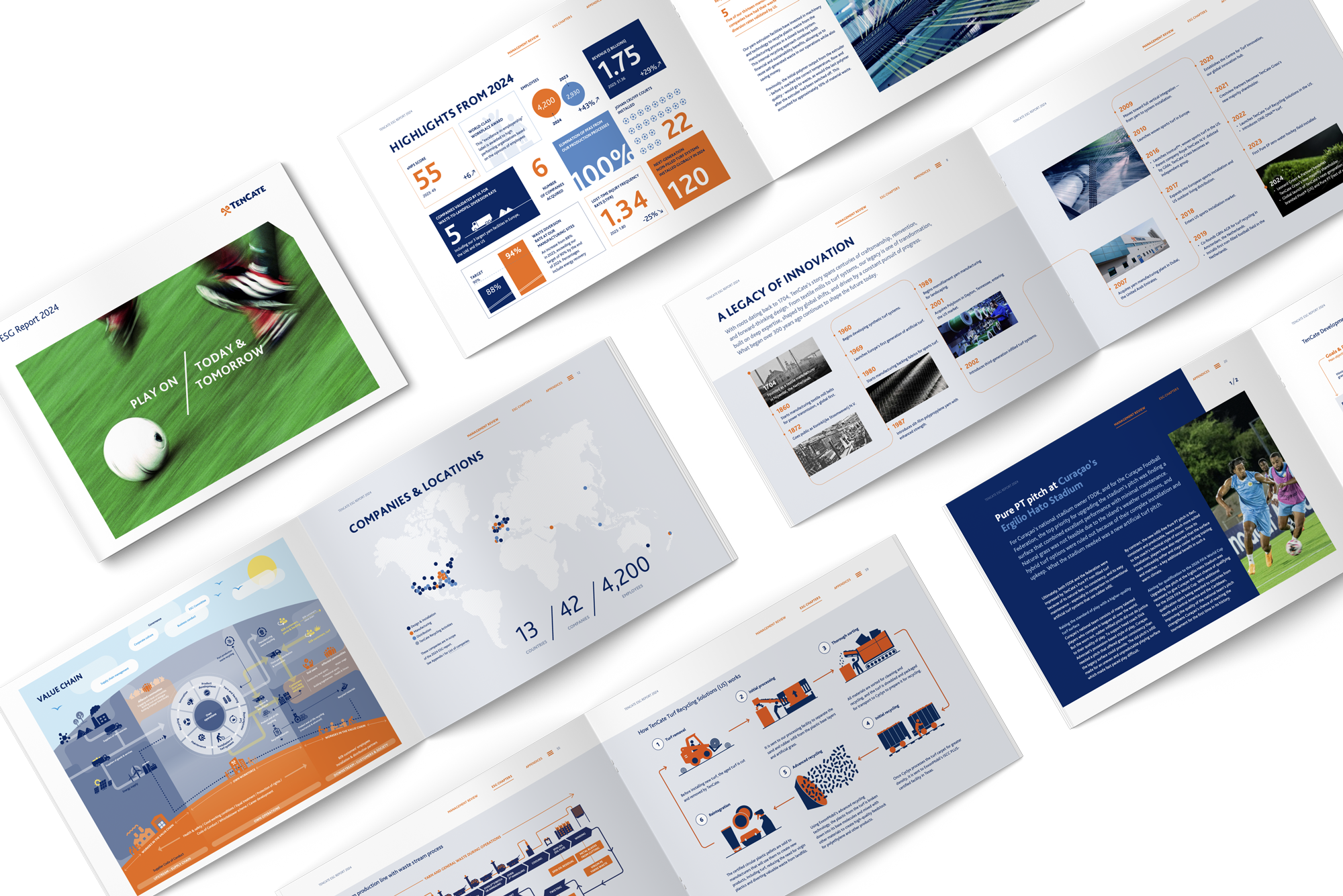
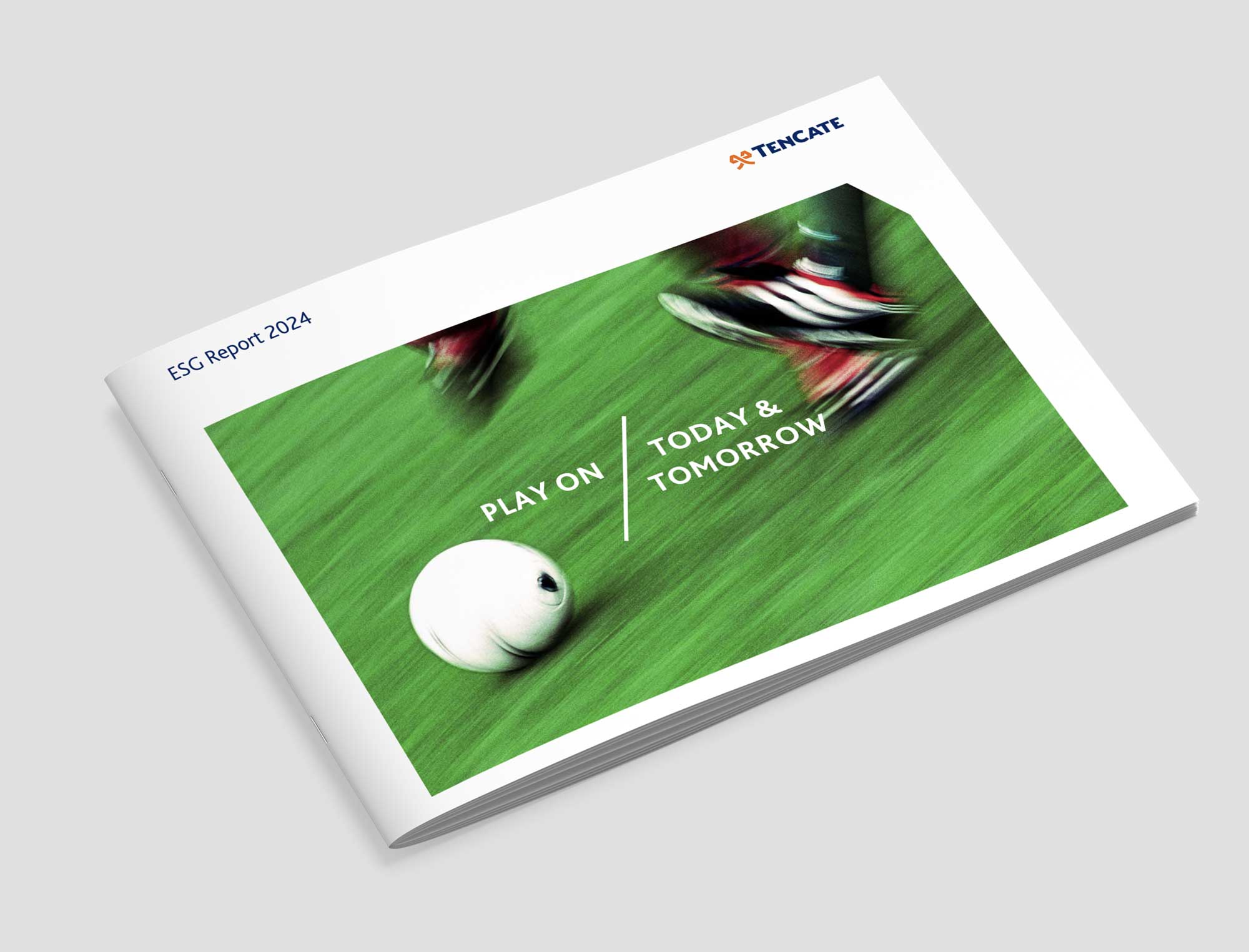
Read more about our commitment to sustainable and responsible business practices in our Environmental, Social, and Governance (ESG) Report.
Download
ESG Report 2024
ESG Report booklet printed version
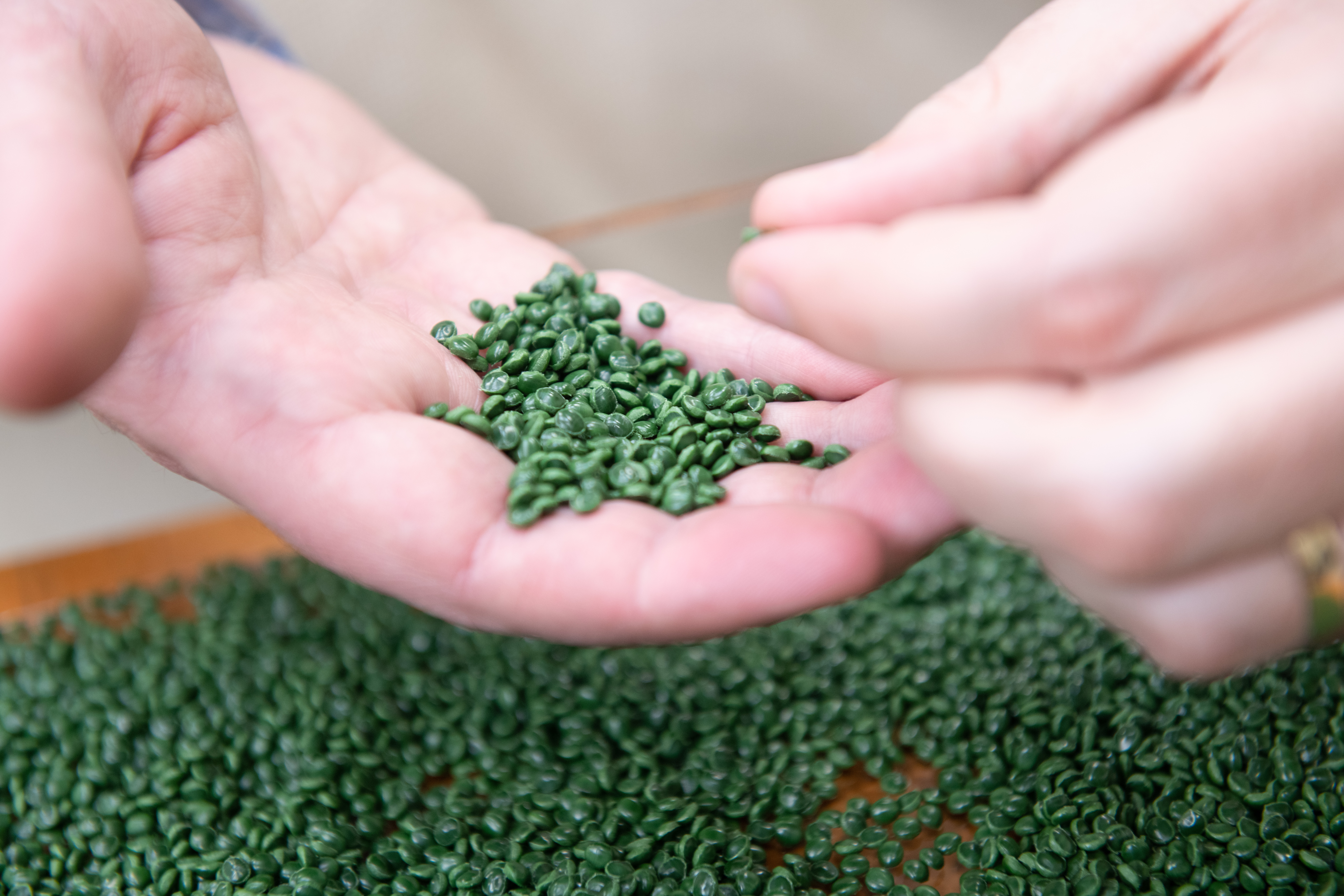
Close-up of hands holding and sorting small green plastic granules.
Performance Today. Material Value Tomorrow.

The most effective way to reduce environmental impact is not at the end of a product's life. It begins at the design stage.

New generations of TenCate turf systems are developed to perform longer, require fewer resources, and retain material value. Through continuous innovation in materials, system design, and manufacturing, TenCate is helping shape a future where high-performance turf systems support both today's players and tomorrow's needs.

Worker inspecting artificial turf by running a hand over the grass fibers during testing..
One of the most important ways to reduce resource consumption is to extend product life.
At the Center for Turf Innovation, turf systems are developed through biomechanics, player testing, durability conditioning, and real-world field validation. The objective is simple: create surfaces that maintain performance under intensive use while reducing the need for premature replacement.
Longer-lasting systems help reduce material consumption, installation activity, and operational disruption over time, while providing reliable access to sport, play, and recreation for the communities that depend on them.
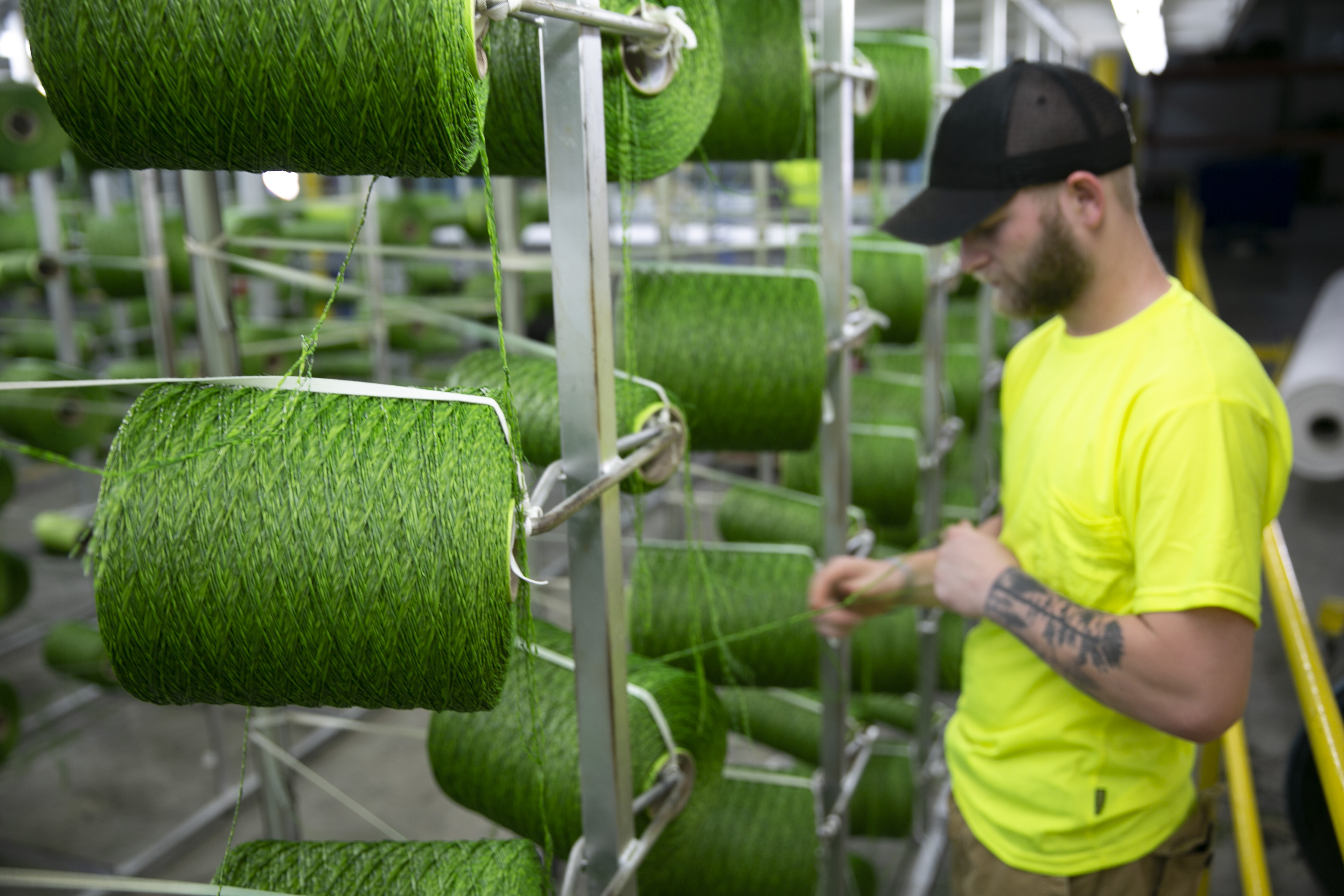
Employee with yarn rack
Innovation is changing the way turf systems are built.

With Pivot’s advanced yarn technologies and simplified system architectures, TenCate continues to reduce dependence on large volumes of infill materials while improving durability and long-term performance.

These innovations help lower transport requirements, reduce maintenance demands, and create systems that are easier to manage throughout their service life.
Recycling Hesperia Still 4 (1)
When a field eventually reaches the end of its service life, the next phase begins.

TenCate operates TenCate Turf Recycling Solutions, with ongoing investment in advancing US-based recycling infrastructure and technologies designed to expand opportunities for material regeneration and reuse.

By creating practical pathways for material recovery, valuable resources can remain in circulation longer.
TenCate-Grass-ESG-Report-2024 1
Design decisions influence environmental performance throughout the lifecycle of a field. Innovations such as Pivot systems reduce the need for heavy infill materials, lowering transportation requirements and associated emissions. For field hockey, TenCate has developed Pure EP, which eliminates the need for irrigation while recreating the playing characteristics required for the highest level of competition. These improvements are achieved through engineering and design, creating measurable benefits without compromising performance.

Driven By Change

For us, sustainability means responsibility: for the materials we use, the people we employ, and the communities we impact. We design products that last longer, use fewer resources, and are increasingly developed with end-of-life material recovery in mind. Our ambition is to move toward full circularity: working to collect end-of-life turf systems, recover polymer materials, and return them to productive use wherever possible.